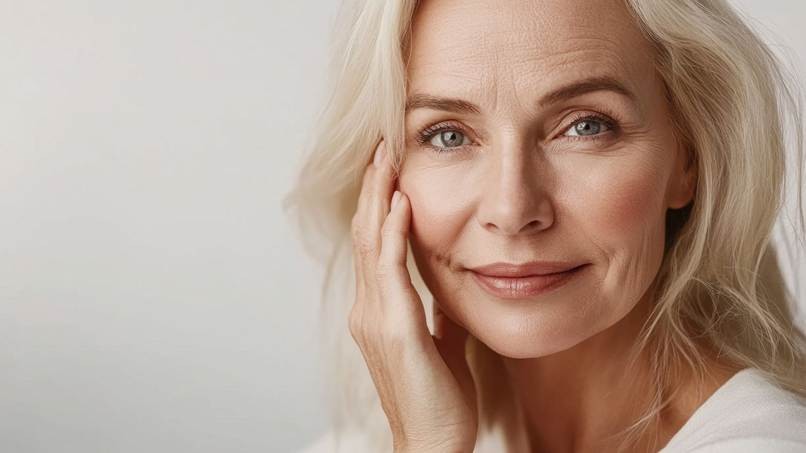
Spermidine is currently taking the skincare world by storm – and for good reason. While it may not sound like a classic beauty ingredient at first, this naturally occurring molecule holds remarkable potential for cell renewal, skin protection, and anti-aging.
What is spermidine?
Spermidine belongs to the so-called polyamines – natural compounds that occur in all living cells. In the body, spermidine is involved in important processes such as:
• Cell growth
• Cell division
• Regeneration
• Repair mechanisms
The special feature: Although our body produces spermidine itself, this production decreases with age. This is why it is becoming more and more interesting to obtain it through diet, supplements or even cosmetic products.
Spermidine is also found in many foods, e.g. wheat germ, soy (e .g. natto, matured cheese, mushrooms :Wheat germ, soybeans (e.g. natto), matured cheese, mushrooms
Why is spermidine so exciting for the skin?
1) Spermidine supports cell renewal (autophagy)
One of the most important effects of spermidine is its ability to stimulate so-called autophagy — a kind of the body’s own cellular recycling process. Autophagy ensures that damaged cellular components are broken down, “cellular waste” is removed, and the cell functions more efficiently and healthily.
For the skin, this is a major advantage, as dead skin cells need to be removed regularly to keep the skin smooth, calm, and healthy. When these cells accumulate, they can promote irritation and even encourage inflammation. Autophagy is therefore essential for a properly functioning skin barrier and overall skin health. (Sil et al., 2018)
Spermidine is a well-studied trigger of autophagy and is being discussed as a promising active substance in longevity research. (Hofer et al., 2022)
2) Spermidine strengthens the skin barrier & improves hydration
Our skin barrier acts like a protective shield: it keeps moisture locked into the skin while at the same time protecting it from external stressors such as environmental pollution, bacteria, irritants, and dry air.
Spermidine can support the skin barrier by promoting the growth and differentiation of keratinocytes — the cells that make up the majority of the outermost layer of the skin. (StatPearls, 2024)
A study from Communications Biology (2021) describes that spermidine can contribute to the recovery of dermal structure and barrier function – an indication of better stability and protective function of the skin. (Kim et al., 2021)
In addition, an animal study showed that spermidine (administered both systemically and topically) was able to accelerate wound healing — an intriguing indication that spermidine may also play a role in regeneration and repair processes. (Ito et al., 2021)
3) Spermidine has an anti-inflammatory effect – important for blemished or sensitive skin
Inflammation is considered to be one of the main drivers of skin ageing (“inflammaging”) – and also plays a role in many skin problems, e.g. acne, eczema, psoriasis or sensitive and stressed skin in general.
Spermidine can influence inflammatory processes by regulating signaling pathways involved in the formation of pro-inflammatory cytokines. (Choi & Park, 2012)
This means less chronic inflammatory activity – and therefore potentially a calmer, more balanced complexion.
4) Antioxidativer Schutz: weniger oxidativer Stress, weniger Hautalterung
Oxidative stress occurs when free radicals overwhelm the body’s own protective systems. This can lead to premature wrinkles, loss of elasticity, or skin damage caused by UV exposure and environmental stress. Spermidine shows antioxidant effects and has been shown to have a protective effect in models with inflammatory and stress reactions. (Jeong et al., 2018)
Even though the direct effects on the skin have not yet been fully confirmed in human studies, it is considered plausible that stable spermidine levels may help reduce cellular damage — and thereby slow skin ageing in the long term.
5) More collagen: firmer skin & fewer wrinkles
Collagen is the structural protein that “plumps up” our skin. Collagen production decreases with age, resulting in wrinkles and sagging skin with less elasticity.
Spermidine has been associated with promoting collagen synthesis. Particularly exciting here is the study from Communications Biology (2021), which points to an improvement in skin structure. (Kim et al., 2021)
6) Spermidine & the skin microbiome
The skin microbiome consists of millions of microorganisms that protect our skin. If it gets out of balance, this can promote skin problems such as neurodermatitis, acne or psoriasis.
In a study by Kim et al. (2021), it was reported that spermidine can influence the development of certain bacteria that are associated with healthy skin (e.g. S. pneumoniae and S. infantis). (Kim et al., 2021)
Important: Research in this area is still young – but the topic is extremely exciting.
7) The Gut-Skin-Axis effect: beautiful skin starts in the gut
The so-called Gut-Skin Axis describes the connection between the gut and skin. If the gut gets out of balance (dysbiosis), this can promote systemic inflammation – and show up on the skin.
Spermidine is also discussed in connection with the stabilization of the microbiome, which can indirectly lead to less inflammation, a more stable immune response and better skin balance.
How can I integrate spermidine into my routine?
1) About nutrition
Regularly eat foods rich in spermidine such as: Wheat germ, soy products, mature cheese, mushrooms and legumes.
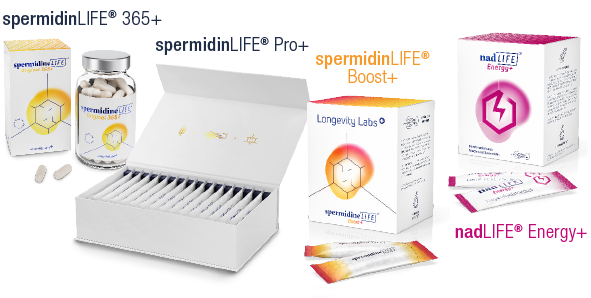
2) As a supplement
3) In skin care (topical)
Spermidine is also increasingly appearing in cosmetic products — most commonly in formulations designed for anti-ageing, barrier protection, or regeneration.
Note: DIY mixing (e.g. capsules in creams) can work, but you must pay attention to hygiene, stability and compatibility.
Conclusion: Is spermidine a real game changer for the skin?
Spermidine is an extremely exciting active ingredient because it addresses several “beauty issues” at the same time:
• Cell renewal (autophagy)
• Barrier & moisture
• Inflammation regulation
• Antioxidant protection
• Collagen & skin structure
• Microbiome & regeneration
Even though many of the findings still come from preclinical research, the overall body of evidence is promising – and spermidine may, in the long term, establish itself as a core component of modern longevity and skincare routines.
Sources / Studies
[1] Sil, P., Wong, S. W., & Martinez, J. (2018). More than skin deep: Autophagy is vital for skin barrier function. Frontiers in Immunology. https://doi.org/10.3389/fimmu.2018.01376
[2] Hofer, S. J., Simon, A. K., Bergmann, M. et al. (2022). Mechanisms of spermidine-induced autophagy and geroprotection. Nature Aging. https://doi.org/10.1038/s43587-022-00322-9
[3] Yousef H, Alhajj M, Fakoya AO, et al. (2024). Anatomy, Skin (Integument), Epidermis. StatPearls. https://www.ncbi.nlm.nih.gov/books/NBK470464/
[4] Kim, G., Kim, M., Kim, M. et al. (2021). Spermidine-induced recovery of human dermal structure and barrier function by skin microbiome. Communications Biology. https://doi.org/10.1038/s42003-020-01619-4
[5] Ito D, Ito H, Ideta T, et al. (2021). Systemic and topical administration of spermidine accelerates skin wound healing. Cell Communication and Signaling. https://doi.org/10.1186/s12964-021-00717-y
[6] Choi, Y. H., & Park, H. Y. (2012). Anti-inflammatory effects of spermidine in lipopolysaccharide-stimulated BV2 microglial cells. Journal of Biomedical Science. https://doi.org/10.1186/1423-0127-19-31
[7] Jeong JW, Cha HJ, Han MH, et al. (2018). Spermidine protects against oxidative stress in inflammation models using macrophages and zebrafish. Biomolecules & Therapeutics. https://doi.org/10.4062/biomolther.2016.272
[8] Kim, G., Kim, M., Kim, M. et al. (2021). Spermidine-induced recovery of human dermal structure and barrier function by skin microbiome. Communications Biology. https://doi.org/10.1038/s42003-020-01619-4