As more women choose to delay childbirth, the impact of age-related fertility decline becomes a growing concern. Female fertility is a complex process influenced by age, lifestyle, and biological mechanisms, with ovarian aging—marked by diminished ovarian reserve and declining oocyte quality—posing a significant challenge to conception later in life.
Recent research suggests that spermidine may play a crucial role in supporting female reproductive health. Studies indicate that spermidine supplementation can enhance mitochondrial function, improve oocyte quality, and slow ovarian aging, offering a potential strategy for extending fertility. This blog explores the link between female fertility and spermidine, highlighting key scientific findings on its potential benefits.
Delaying ovarian aging to improve overall health & longevity
The ovaries age earlier than most other organs in the body, making ovarian aging a significant challenge for women trying to conceive later in life. Marked by a decline in egg quality (the ability of an egg to be fertilized) and a reduced ovarian reserve (the number of remaining eggs), this process gradually diminishes the ovaries’ ability to produce eggs and hormones, directly impacting reproductive health.
This decline in ovarian function is closely linked to a range of age-related conditions, such as osteoporosis, heart disease, and cognitive decline. Ovarian aging is often referred to as the pacemaker of female aging—it not only affects fertility but also accelerates the aging process across various aspects of health.
Ovarian function begins to decline after the age of 30, becoming more pronounced after 35, and eventually failing between the ages of 50 and 52. Around 10% of women experience ovarian failure before reaching the age of 40, a condition known as premature ovarian insufficiency (POI). Since ovarian aging is tied to a higher risk of age-related health issues, finding ways to slow this process becomes even more crucial. Extending the reproductive window not only supports fertility but may also help lower the risk of other aging-related conditions.
How can ovarian aging be delayed? Spermidine may have a role to play.
Spermidine Protects Egg Quality
If you want to dive into just one study, make it this groundbreaking 2023 research published in Nature Aging. It shows how spermidine levels decline in aging ovaries and how supplemental intake can restore egg quality in older mice.
The key players? Mitochondria. Healthy mitochondria are central to fertility, as these energy-producing cell organelles are essential for egg maturation and embryo development. Mitophagy, a specialized form of autophagy, removes damaged mitochondria, maintaining a healthy pool of functional mitochondria in the body.
Spermidine is the most potent activator of both autophagy and mitophagy, supporting cellular health by promoting the clearance of dysfunctional mitochondria. By boosting mitophagy and reducing oxidative stress, spermidine enhanced follicle development, egg maturation, and early embryo viability.
Spermidine is the most potent activator of both autophagy and mitophagy, supporting cellular health by promoting the clearance of dysfunctional mitochondria. By boosting mitophagy and reducing oxidative stress, spermidine enhanced follicle development, egg maturation, and early embryo viability.
Remarkably, the study also found that spermidine supplementation nearly doubled the number of offspring produced by aging female mice, underscoring its potential to rejuvenate reproductive capacity. Given the observed effects on aging mice, researchers are now exploring spermidine’s potential to extend fertility in other species, including humans. This study underscores the importance of spermidine in maintaining fertility and opens novel avenues for future interventions aimed at combating age-related reproductive decline.
These findings align with previous research supporting spermidine’s role in reproductive health. A 2021 study showed that spermidine-induced autophagy in female germline stem cells from mice mitigated oxidative stress and delayed aging by modulating the PI3K/AKT/mTOR signaling pathway, an important cellular communication system that helps regulate cell growth.
Supporting this, a 2024 study in Cell Communication and Signaling showed that spermidine protects postovulatory aged porcine oocytes (eggs that degrade after ovulation) by reducing DNA damage, improving mitochondrial function, and boosting fertilization rates. Similar benefits were seen in vitrified (frozen) oocytes (Antioxidants 2025), where spermidine restored gene expression and reduced oxidative stress, making it a potential tool for IVF treatments.
Together, these studies reinforce spermidine’s essential role in maintaining oocyte quality through mitochondrial and autophagic mechanisms.
Spermidine doesn’t just protect oocytes—it also supports the ovarian environment. A 2023 study in International Journal of Molecular Sciencesfound that spermidine reduces follicular atresia (the degeneration of egg follicles) by boosting autophagy and the activity of antioxidant enzymes, helping to preserve ovarian function.
Oxidative stress is known to accelerate ovarian aging by damaging oocytes and granulosa cells, which are essential for fertility. Spermidine helps counteract this damage by upregulating antioxidant enzymes like superoxide dismutase (SOD) and catalase (CAT), effectively reducing oxidative stress and promoting healthier ovarian tissue.
As the ovaries age, fertility declines, and hormone levels change, affecting overall health. Ovarian hormones play a key role in many parts of the body, including the reproductive system, bones, brain, and skin. A 2019 clinical trial reported that spermidine supplementation in women lowered cortisol (stress hormone) and increased DHEAS (dehydroepiandrosterone sulfate) and testosterone, key hormones for libido and fertility.
The Gut-Ovary Connection: Can Microbiome Changes Boost Fertility?
The gut microbiome is once again in the spotlight! As research progresses, it becomes increasingly clear that we cannot ignore its importance for overall health. New studies now reveal a fascinating link between gut health and ovarian function.
The gut microbiome influences ovarian aging (Gut Microbes, 2024).Since gut bacteria naturally produce polyamines, optimizing gut health could further enhance the benefits of spermidine. Approaches such as probiotics, a high-fiber diet, or even fecal microbiota transplants could one day complement fertility treatments and support ovarian health.
NAD precursors: a powerful ally to spermidine for enhanced fertility
In addition to spermidine, NAD precursors (such as NMN or NAM) are emerging as key compounds in the fight against reproductive aging. These compounds have been shown to restore oocyte quality by replenishing NAD⁺ levels, enhancing mitochondrial function, and reducing oxidative stress—mechanisms similar to those of spermidine.
A 2020 study demonstrated that NAD precursor supplementation improved meiotic competency and fertilization ability in aged mice. Additional research demonstrated that NAD precursors safeguard porcine oocytes from heat stress-induced damage, while another study highlighted their protective effects against oxidative damage caused by environmental toxins.
A pivotal 2023 study published in Nature Aging established a direct link between decreased NAD⁺ levels and ovarian aging. Researchers discovered that the ovary ages faster than most other organs, a process driven by elevated expression of CD38, an enzyme that depletes NAD⁺ levels.
The study showed that increased CD38 expression was associated with lower NAD⁺ levels and led to ovarian inflammation, follicle loss, and reduced egg quality in middle-aged mice. However, genetic knockout or pharmacological inhibition of CD38 restored NAD⁺ levels. This resulted in improved ovarian function, increased fertility, and delayed ovarian aging.
These findings suggest that NAD precursors and spermidine could serve as complementary strategies to extend the reproductive lifespan.
Conclusion: The Potential of Spermidine for Female Fertility
Spermidine is emerging as a versatile approach to supporting female fertility, offering the following potential benefits:
- Improved egg quality through mitophagy and reduced oxidative stress.
- Ovarian protection through autophagy and antioxidant effects.
- Hormonal balance by influencing cortisol and other hormones.
Ongoing research continues to highlight potential benefits—from improved follicle health and reduced oxidative damage to effective hormone regulation. Spermidine could therefore help extend the reproductive lifespan and support women’s overall health.
Moreover, findings with NAD precursors suggest that combining these strategies may offer even greater benefits. As our understanding of reproductive aging deepens, interventions like spermidine may help redefine fertility possibilities for women worldwide.
Start Your Spermidine Journey Now:
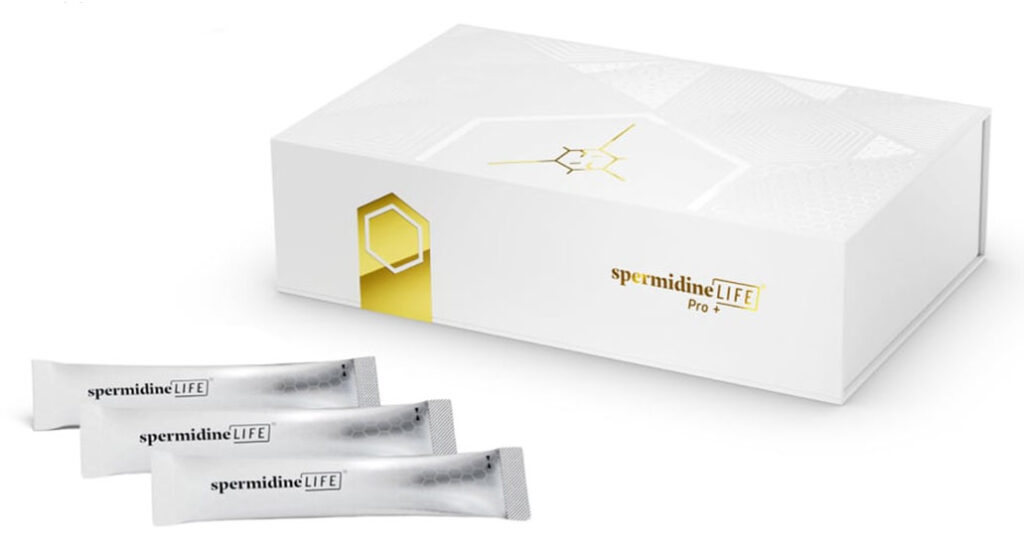
spermidinLIFE Pro+ is a professionally developed formulation containing 6 mg of natural spermidine per daily dose.
This corresponds to the highest approved dosage to date. spermidineLIFE was the first natural spermidine supplement on the market and remains the only one with Novel Food approval.
Spermidine is currently discussed in the scientific literature in connection with the following areas, among others:
- Cellular autophagy
- Healthy aging processes
- Support of barrier function
- Regulation of inflammatory processes