✓ Worldwide shipping✓ Free shipping on orders over CHF 100 (CH)✓ Duty-free delivery to the EU✓ Shipping from our warehouse in Switzerland or the EU✓ Secure payment✓ Worldwide shipping✓ Free shipping on orders over CHF 100 (CH)✓ Duty-free delivery to the EU✓ Shipping from our warehouse in Switzerland or the EU✓ Secure payment
Collagen Before, During, and After Pregnancy
Why collagen matters during this special stage of life
Pregnancy is one of the most remarkable transformations a woman’s body experiences. As your baby grows, your skin stretches, hormones change, and your nutritional needs increase. Your connective tissue, joints, and muscles also adapt to support these changes. Because collagen is the body’s most abundant structural protein, many women wonder whether taking a collagen supplement before, during, and after pregnancy can help support their body’s natural processes.
What is collagen?
Collagen is the primary structural protein found in the skin, connective tissue, bones, cartilage, tendons, and ligaments. It provides strength, flexibility, and elasticity throughout the body. During pregnancy, these tissues are placed under increased strain as they stretch and adapt to accommodate your growing baby. After birth, they begin the natural process of recovery and repair.
Collagen before pregnancy
If you are planning a pregnancy, this is an excellent time to establish healthy nutritional habits. A high-quality collagen supplement can be a useful addition to a balanced diet by providing specific amino acids that support connective tissue and overall skin health. While collagen cannot be proven to prevent stretch marks, maintaining healthy skin and adequate protein intake before pregnancy may help support the skin as it naturally stretches. A daily intake of approximately 10 g of high quality collagen peptides for at least 8–12 weeks before conception is commonly recommended by many nutrition professionals.
Viele Ernährungsexperten empfehlen eine tägliche Einnahme von etwa 10 g hochwertiger Kollagenpeptide über einen Zeitraum von mindestens 8 bis 12 Wochen vor der Empfängnis.
Collagen during pregnancy
During pregnancy, your body’s nutritional demands increase significantly. Collagen provides amino acids such as glycine and proline, which are naturally found in connective tissues throughout the body. Although research on collagen supplementation during pregnancy is still limited, many women choose to include it as part of their overall protein intake.
Collagen may help support healthy skin, connective tissue, joints, and ligaments while your body adapts to pregnancy. However, before taking any dietary supplement during pregnancy, it is important to discuss it with your healthcare provider to ensure it is appropriate for your individual situation.
If approved by your healthcare provider, many collagen supplements recommend 10 g daily. Collagen can be taken at any time of day, and combining it with vitamin C supports the body’s natural collagen production.
Collagen after pregnancy (Postpartum)
The postpartum period is a time of healing and recovery. As hormone levels gradually return to normal, the body repairs tissues that were stretched during pregnancy and childbirth. Many women also notice temporary hair shedding during the months after giving birth, which is a normal hormonal response.
Including collagen as part of a balanced diet may help support connective tissue, skin health, and overall protein intake during recovery. It may also provide additional nutritional support for joints and muscles as they adjust to the physical demands of caring for a newborn.
Many women continue taking 10 g of collagen daily for three to six months postpartum, although individual nutritional needs may vary.
Quality Makes the Difference
Not all collagen is equally effective.
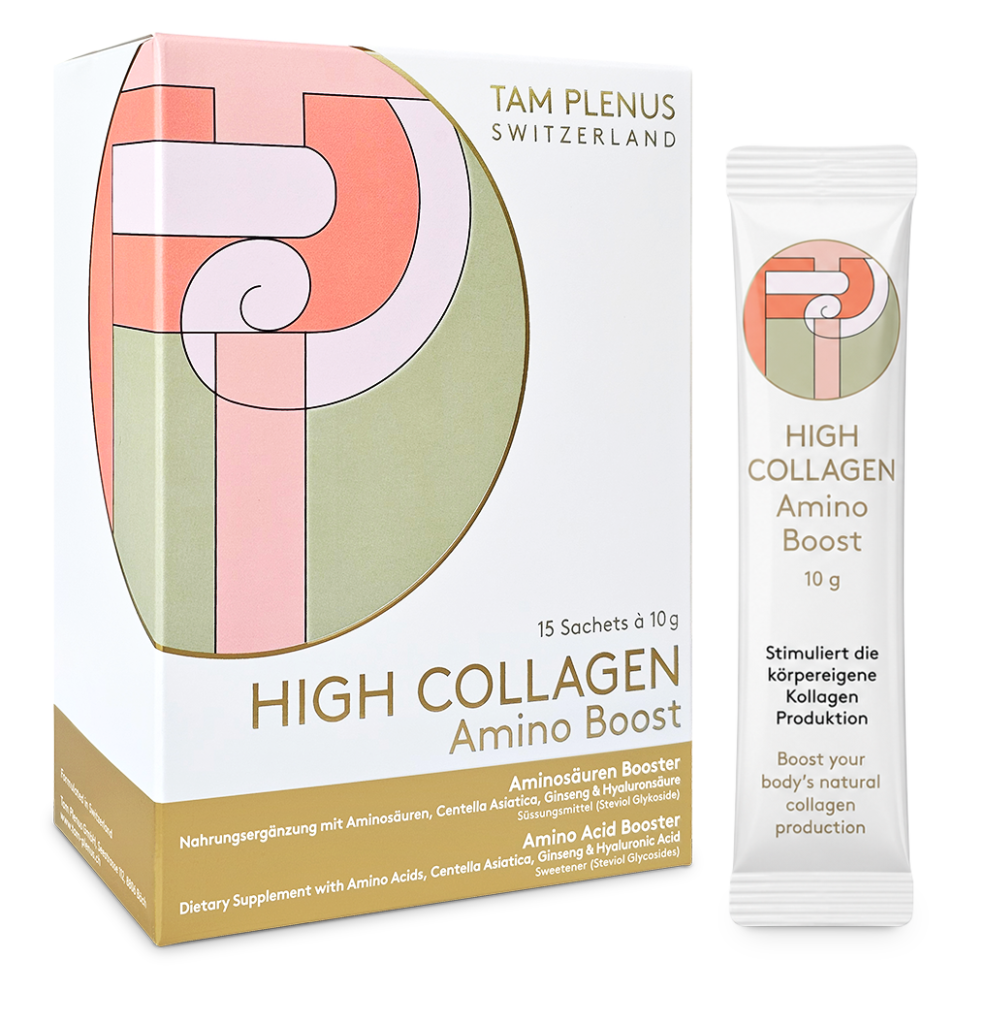
Check out: High-quality collagen: • Molecular density (resorption) • Free of additives • Quality confirmed by studies • Good sources & ingredients. • Animal-based collagen or collagen boosters, both work, but it all comes down to quality
Ideal combination: • with vitamin C • optionally with amino acids or micronutrients
Quality Makes the Difference
Nicht jedes Kollagen ist gleich wirksam.
Check out: High-quality collagen: • Molecular density (resorption) • Free of additives • Quality confirmed by studies • Good sources & ingredients. • Animal-based collagen or collagen boosters, both work, but it all comes down to quality
Ideal combination: • with vitamin C • optionally with amino acids or micronutrients
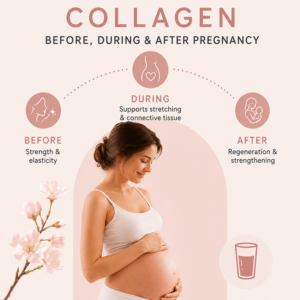
Collagen can provide valuable support during all stages of pregnancy: • Before: Preparing the tissues • During: Supporting the skin and body structure • After: Regeneration and postpartum recovery